
M O B I L E D E S I G N
Joymode
A venture-backed subscription service startup that gives users access to packages and products, helping to create better experiences without the consequence of needing to store unused items
U X / U I D E S I G N E R
Overview
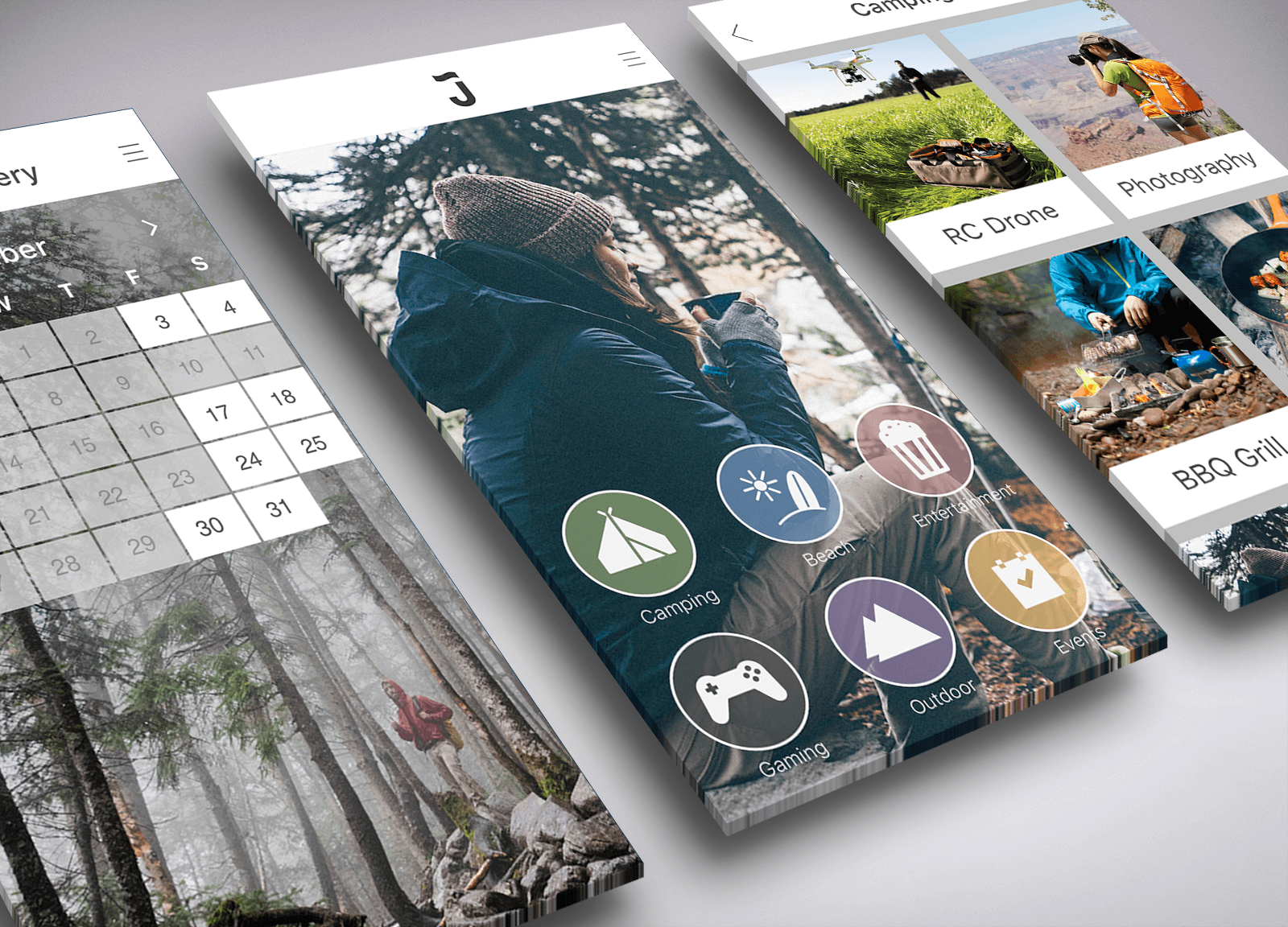
Founded by former Klout CEO, Joe Fernandez, Joymode believes experiences are much more rewarding than material possessions. Our team of three UX designers was tasked to create an app to help introduce the Joymode experience to the residents of Los Angeles. The goal of the project was to design and test a prototype that would incorporate their subscription model, engage customers, include efficient user flows, and improve their current beta website.
TEAM
Ryan Chang (UX / UI Designer)
Daryl Harris (UX / UI Designer)
Joanne Sampoonachot (UX / UI Designer)
SCOPE
2.5 Weeks
User and Stakeholder Goals
As a team, it was important to talk through user and stakeholder needs. In order to successfully design within our constraints, we needed to understand how we should prioritize our time and effort. We created a list of the most important goals based on our conversations, and used it to guide our process.
USER NEEDS
Instructions on how to use the app
More customization of packages
More information about each product
Simple and clear checkout flow
STAKEHOLDER NEEDS
Subscription service with add-ons
Package discovery and customization
Creating an account
Onboarding Instructions
Social media capabilities
User Research
To redesign what Joymode currently had, we needed to understand the thoughts and frustrations users were having while browsing the beta website. We proceeded to test different users to gather valuable insight on how we could make improvements for the app design. We learned that users wanted more education, specification, and customization.
Previous Designs
HOME PAGE
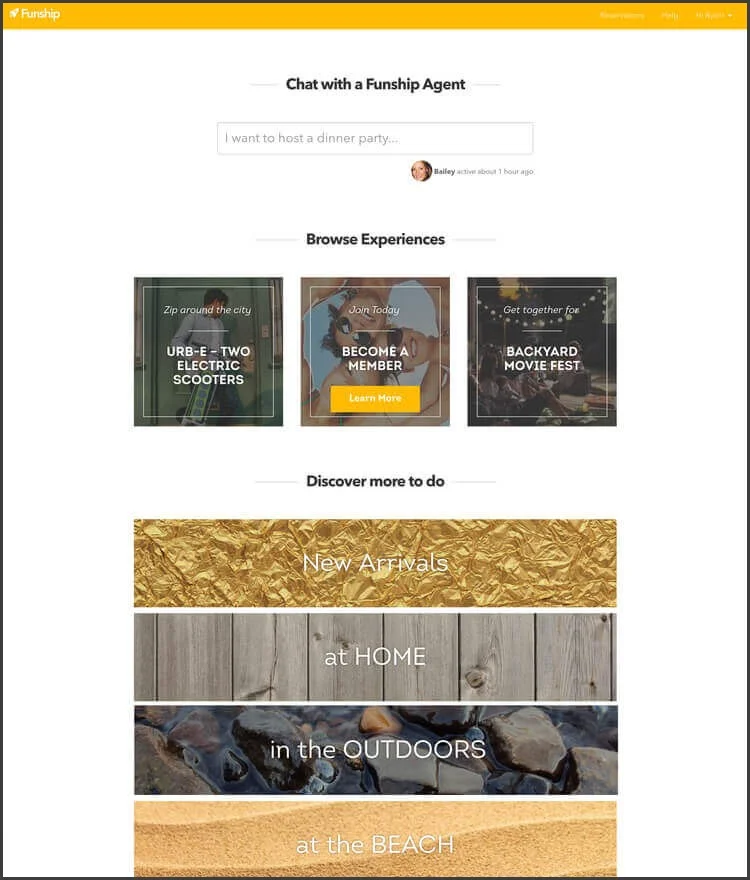
"This is the home page? There's nothing on this page to describe what this service costs or what it offers."
-Bradley K.
Lacking information on what or how to use the service
No organization of categories
PACKAGE DETAIL PAGE
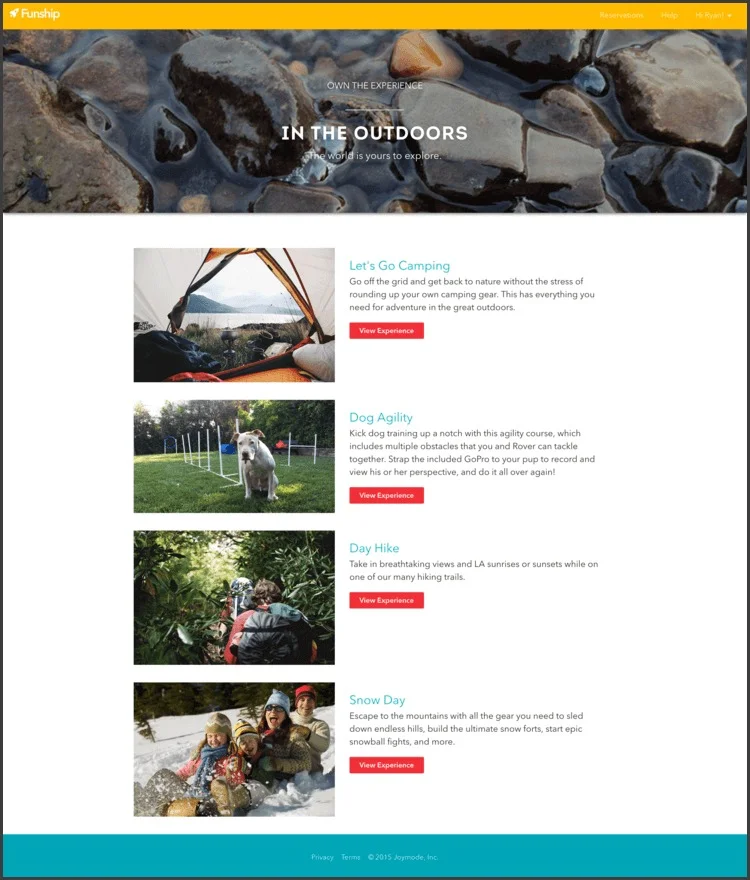
"I like the options, but I don't see way to customize my package. What if there's something I don't need?"
-Kaitlin W.
Lacking customizable options for packages
Limited selection
PRODUCT DETAIL PAGE
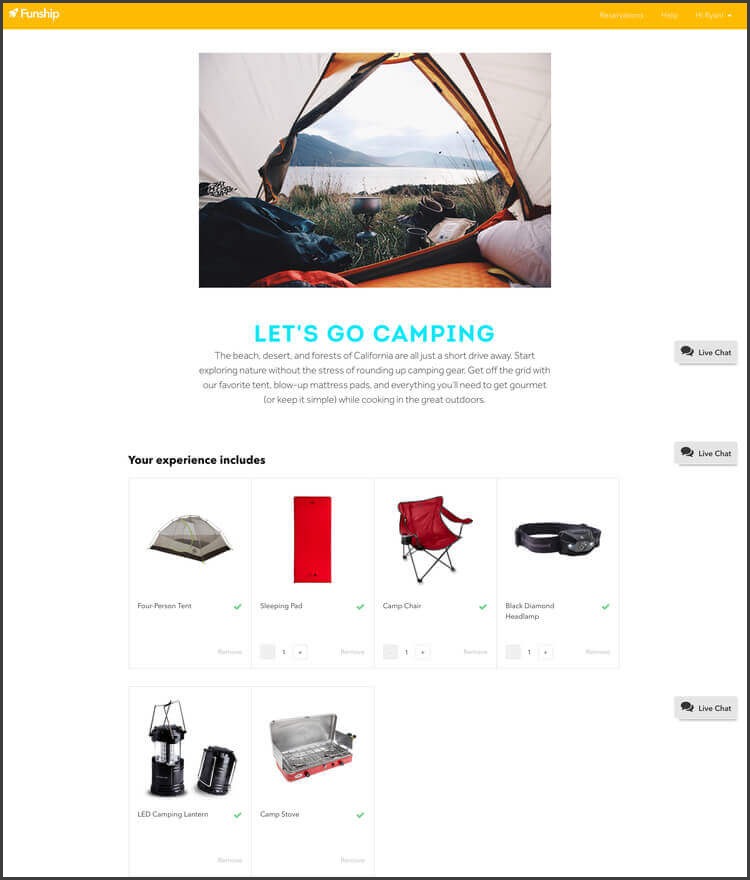
"Would definitely need some of these items on a camping trip. Are these the actual brands of products I would receive?"
-Jackie O.
Lacking information on what or how to use the service
No organization of categories
Design
Using our knowledge gained from our research and whiteboard sessions, we moved forward with the designs assuming the subscription model. We began creating wireframes for each of the main flows within the app. Once we were finished, we tested the designs and made iterations based on the user feedback.
ONBOARDING
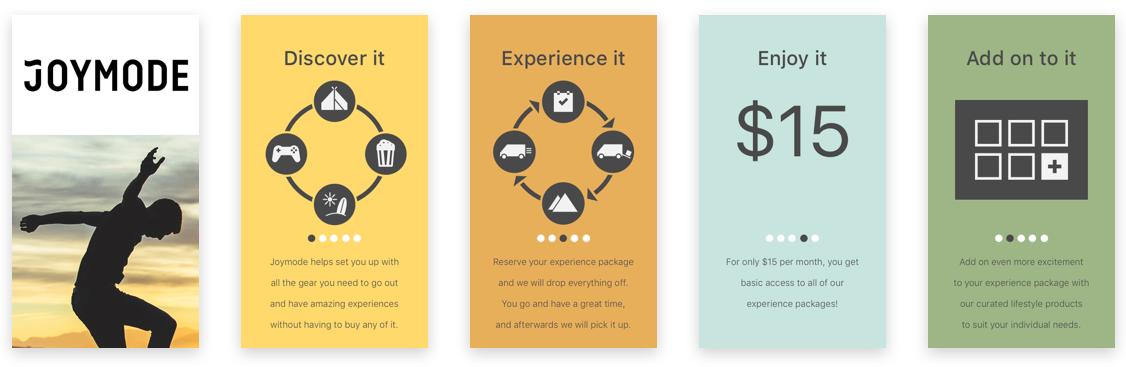
This set of designs shows the onboarding flow. From our stakeholder interview and competitive & comparative analysis, we knew it was essential to add in onboarding instruction into the app. This onboarding flow helps introduce first time users to the app, and gives a visual description for how the service works.
PACKAGE DISCOVERY
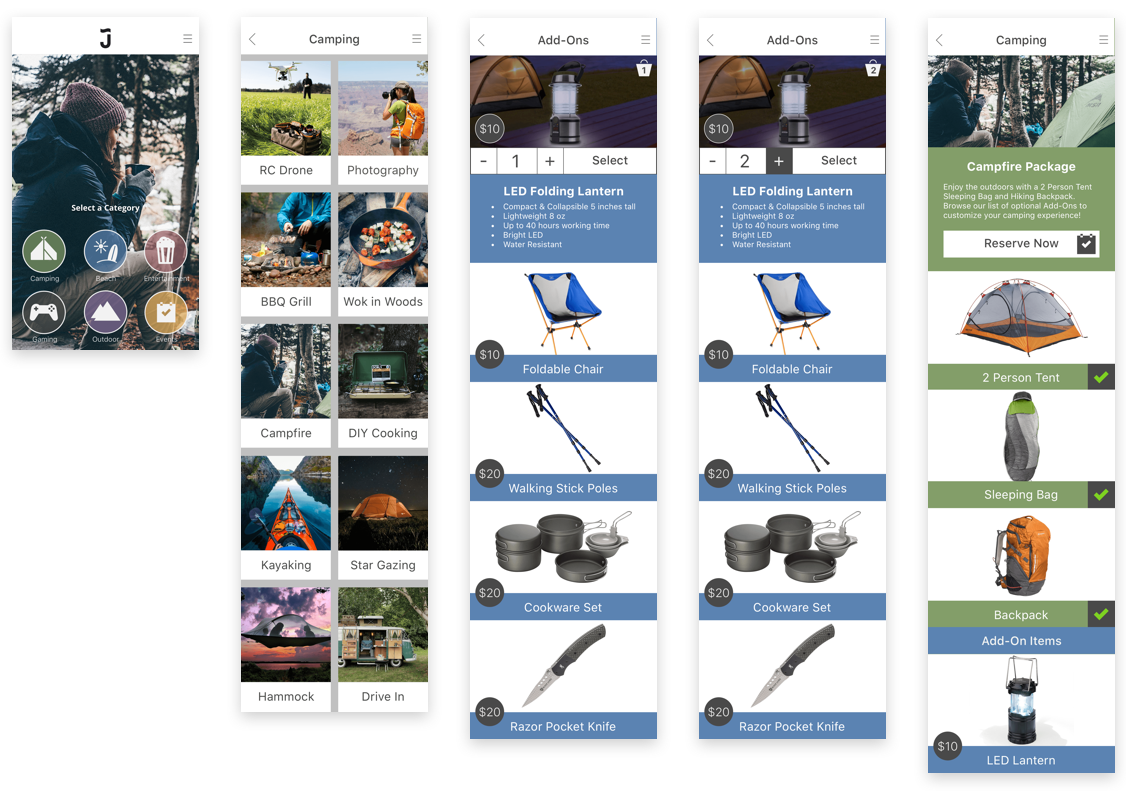
This package discovery flow shows the steps it takes to customize the user's package. The user selects a category, chooses a package, then customizes the package to enhance their experience. The thumbnail and vertical scroll allows users to easily glance at packages and envision what the experience would be like with the images accommodating each thumbnail.
DELIVERY & RETURN
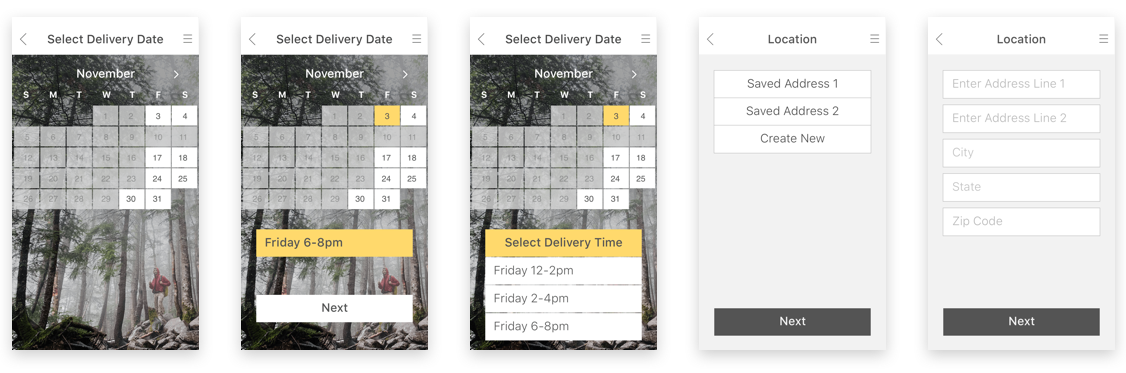
Users can use this delivery & return flow to browse and select delivery and return times. The non-greyed out dates indicate that those dates are available. The available times populate once the user selects a date.
Our Lean UX Process
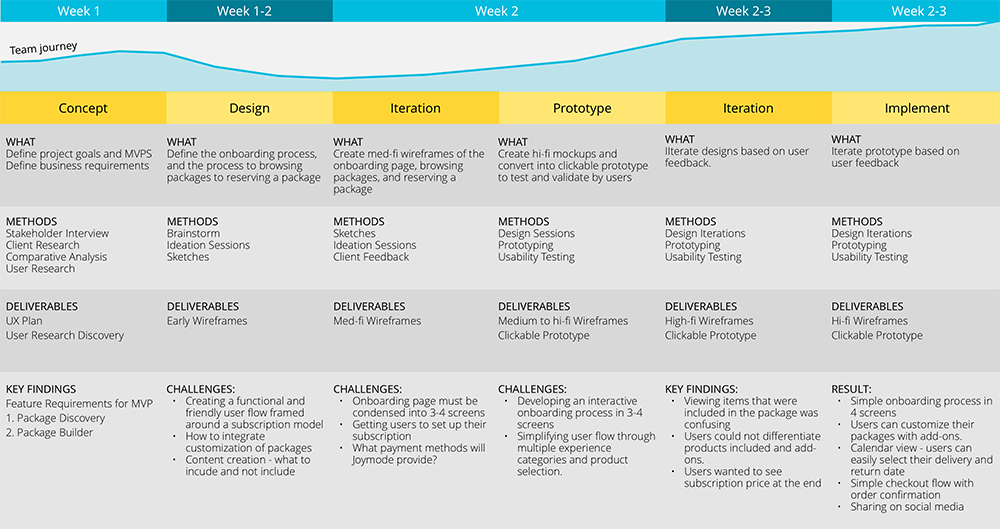
Below is a diagram of the lean UX process we implemented to ensure that we worked efficiently and met the deliverables that we set each day. Our process was centered on communication with our client and meeting the expectations of the targeted users and the business stakeholders.
Competitor Analysis
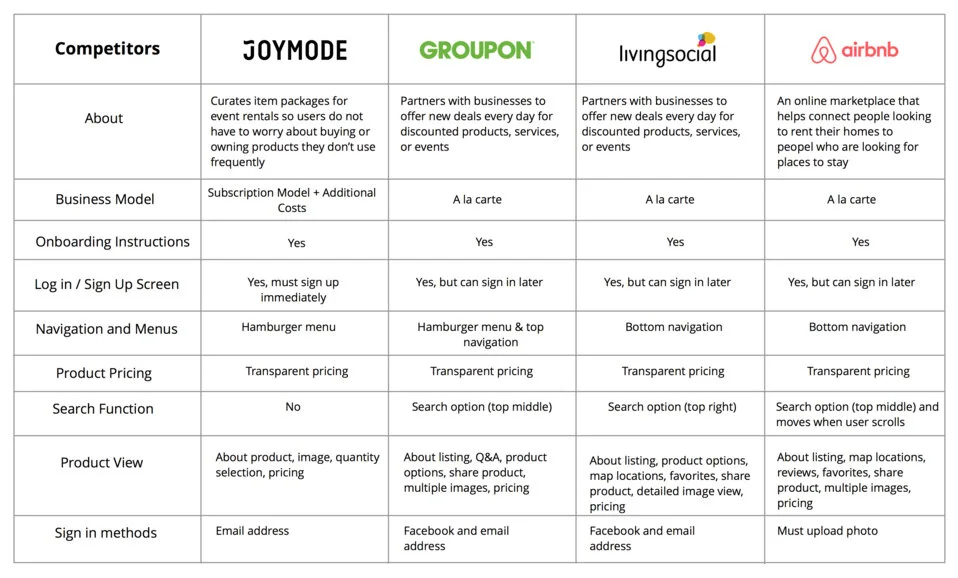
We researched competitors within the experience renting industry to get a better understanding of how they each operated based on their business model. We looked at how each competitor onboarded their customer, how their business model guided the user flows, as well as commonly-used design conventions within the industry.
Subscription vs a la Carte
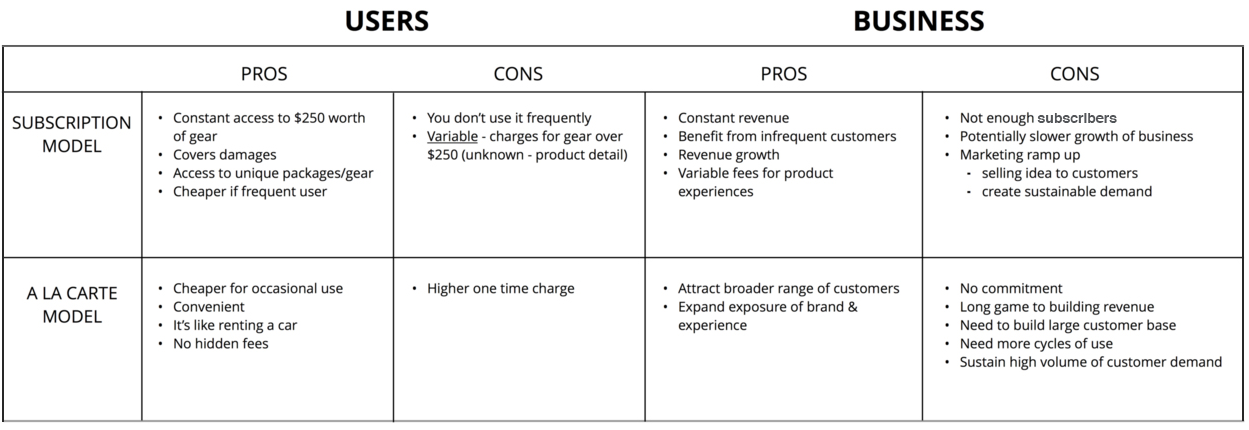
Joymode had not determined whether they wanted to go with a subscription or al la carte business model. We decided to list out all of the pros and cons for both the user and the business, and concluded that the subscription model would provide a better value to both, assuming the packages were attractive enough.
Personas
THE ENTERTAINER
Goals: To connect people together through a shared experience while entertaining the crowd
Needs: An experience that is affordable
THE EXPLORER
Goals: Seeks out new experiences and likes to be the first to discover new things to do locally
Needs: Unique things that aren't readily accessible
THE NETWORKER
Goals: A social concierge who likes engaging and exchanging information with people
Needs: A variety of fun things to do outdoors
User Flow
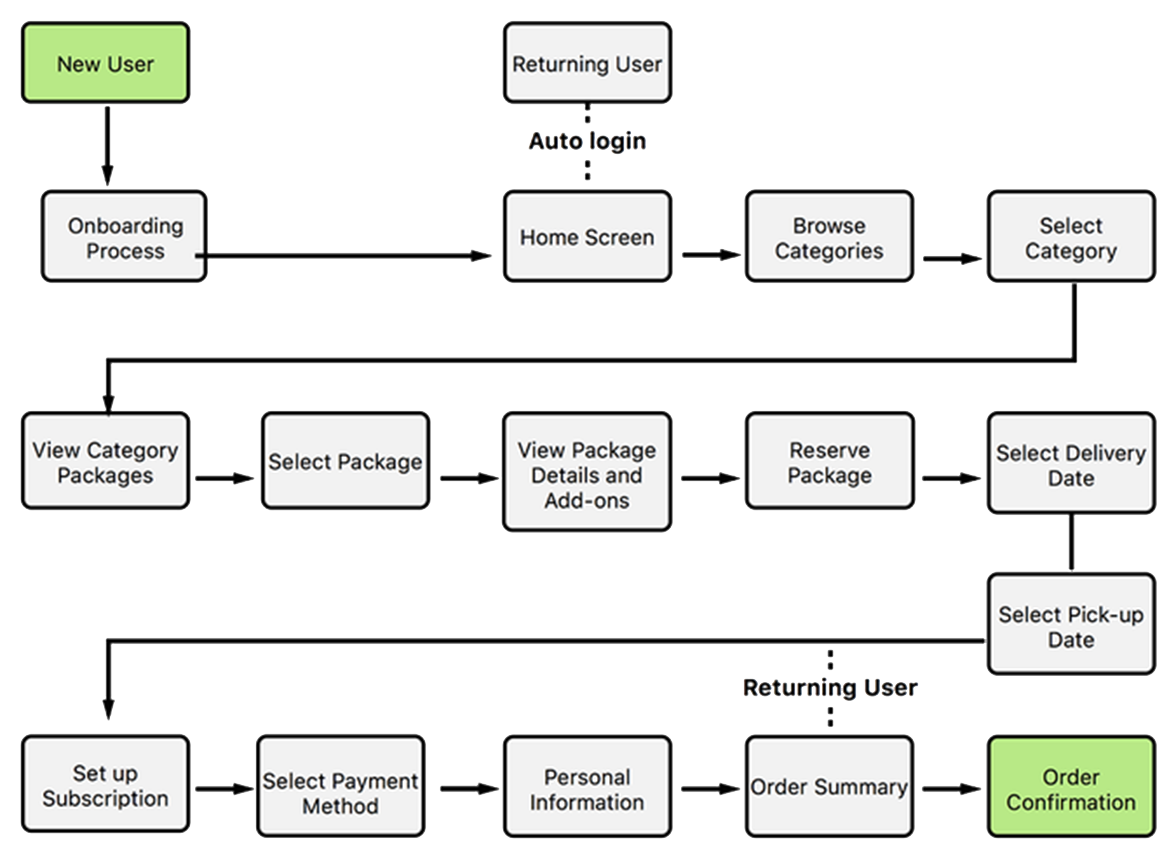
To lay out the roadmap for our app, we created this user flow to indicate the steps it takes to convert customers, new and returning. Beyond the onboarding process, we wanted users to get used to the flow of selecting a package and be able to quickly browse packages for any desired event.
FLOW INCLUDES TARGET MVP POINTS:
Customer Onboarding
Easy Sign-in
Package Discovery
Package Customization
Create Account
Reserve a Package
Prototype
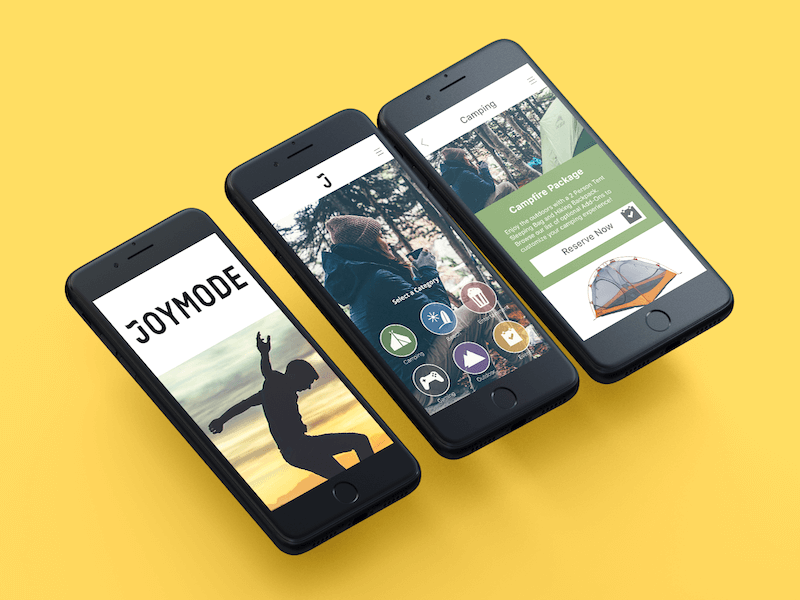
We established our design process based on project deliverables and interviews with Joymode’s CEO, Joe Fernandez. By going through the UX process, we were able to produce a brand-new mobile app design for Joymode.
Results
Introduce Joymode's service with onboarding
Promotes active lifestyle through visual exploration and package discovery
Caters to a variety of targeted customers by providing package building and customization
Challenges
Presenting value in the subscription model service to customers
Building out the transaction experience between customers and the business
Presenting a clear and concise understanding of package customization, specifically the difference between items included and add-ons items